Only 17% of organizations report having top-tier TPRM data quality, yet in 2026 we ask risk teams to sign off on complex supplier ecosystems every week. TPRM risk management maturity is no longer a “nice to have”, it is the difference between informed supplier assessment and guesswork.
Key Takeaways
| Question | Answer |
|---|---|
| What is TPRM risk management maturity? | It is a staged view of how structured, data driven, and integrated your supplier risk management processes are, from ad‑hoc checks to fully automated, AI assisted TPRM. |
| Why does maturity matter in 2026? | Mature programs centralize risk, run continuous assessments, and free small teams to focus on real decisions instead of spreadsheet administration. |
| How can AI improve TPRM maturity? | AI tools like the CheckFirst AI Engine automate supplier research, questionnaire analysis, and control mapping so risk managers work with verified insights, not raw data. |
| Where should we start if everything is manual? | Begin by standardizing vendor assessment workflows with a platform such as CheckFirst security assessments, then add automation for scanning and documentation review. |
| How do we budget for maturity improvements? | Use transparent plans like the Starter, Professional, and Enterprise tiers on the CheckFirst pricing page to align tooling scope with your current TPRM stage. |
| Who needs to be involved internally? | Security, compliance, procurement, and risk owners should agree on common supplier assessment criteria and a shared TPRM roadmap. |
1. What TPRM Risk Management Maturity Really Means In 2026
TPRM risk management maturity describes how consistently, efficiently, and accurately we identify, assess, and monitor risk across our supplier base. At lower maturity, TPRM is reactive and driven by documents in email threads, at higher maturity it is proactive, data driven, and integrated with enterprise risk.
In 2026, most organizations already run some form of vendor due diligence, yet struggle to connect isolated checks into a single, repeatable risk management process. Maturity is about this end to end capability, not just individual tools.


From a practical point of view, maturity shows up in how we treat supplier data, who owns risk decisions, and how quickly we can respond when something changes. It is as much about governance and workflows as it is about technology.
For teams in the Testing, Inspection, and Certification space, the pains are familiar. We review hundreds of supplier documents, certifications, and assessments, yet we still manually reconcile them to frameworks and internal requirements.
2. The 5-Stage TPRM Risk Management Maturity Model
To make TPRM manageable, we can use a simple five stage maturity model that covers the full supplier lifecycle. This gives risk leaders a shared language to explain where we are and what comes next.
A typical 5 stage model looks like this:
- Stage 1: Initial – ad hoc supplier checks, no central inventory, minimal documentation.
- Stage 2: Managed – basic policies, some templates, risk captured in spreadsheets.
- Stage 3: Defined – standardized assessments tied to frameworks and controls.
- Stage 4: Quantified – metrics on control effectiveness, data driven supplier decisions.
- Stage 5: Optimized – continuous monitoring, AI supported analysis, integrated enterprise risk.
Each stage tightens the link between supplier assessment and actual risk outcomes. Moving from one stage to the next usually means standardizing workflows first, then adding automation where human time is scarce.
For example, moving from Initial to Managed might simply mean capturing all suppliers in a central register. Jumping from Defined to Quantified requires metrics on control pass rates and incident response effectiveness.


We see many teams in 2026 stuck between stages 2 and 3. They have policies on paper but no reliable way to check if suppliers really meet them in practice.
That gap is where AI based assessment tools and structured workflows provide the highest return on effort.
3. Visualizing Your TPRM Journey: 5-Step Maturity Infographic
Risk teams often know their pain but struggle to express maturity in a way leadership understands. A clear visual model helps bridge that conversation quickly.
Use the infographic below as a reference point during internal workshops or steering committee meetings. It compresses the TPRM risk management maturity journey into a format that fits on a single slide.
A concise visual of the five-stage TPRM risk management maturity model, guiding organizations from initial to optimized risk governance. Use this infographic to benchmark current maturity and plan improvements.
When we walk teams through this model, we often ask a simple question. If a critical supplier failed tomorrow, which stage would your response look like in reality, not in policy?
That question usually exposes the gap between aspiration and current practice. The goal is not to jump from stage 1 to stage 5 in one project but to set realistic targets for the next 12 to 24 months.

For supplier facing teams, the infographic is also a useful way to explain why assessments look different by risk tier. Mature programs do not treat a low risk supplier the same as a critical one, and that is a strength, not a weakness.
This tiered approach is essential to handle hundreds or thousands of third parties without growing the TPRM team linearly.
4. Data Quality, Continuous Monitoring, And Maturity Benchmarks
As maturity increases, data quality becomes the main constraint. If supplier data is incomplete or inconsistent, every other TPRM control starts to wobble.
We see this clearly when we compare organizations with high quality data to those without. Among respondents with reliable data, 52% feel very confident in their TPRM decisions, compared with much lower confidence in the rest.


Mature TPRM programs do not treat risk assessment as a one time event at onboarding. They combine point in time questionnaires with continuous monitoring of threats, certifications, and public incidents.
By advanced maturity, around 92% of organizations run continuous monitoring with alerts. That is now the benchmark for critical suppliers in 2026, not an optional extra.
For smaller teams, this level of monitoring is only realistic when scanning and research steps are automated. Manual web checks simply do not scale beyond a handful of high risk vendors.
This is where AI driven monitoring and external scanning change the game for under ten person TPRM teams.
5. Turning Supplier Assessments Into A Repeatable Workflow
A common sign of low maturity is that every supplier assessment feels unique, even when the same risk questions repeat. The process depends on who is available that week instead of a defined workflow.
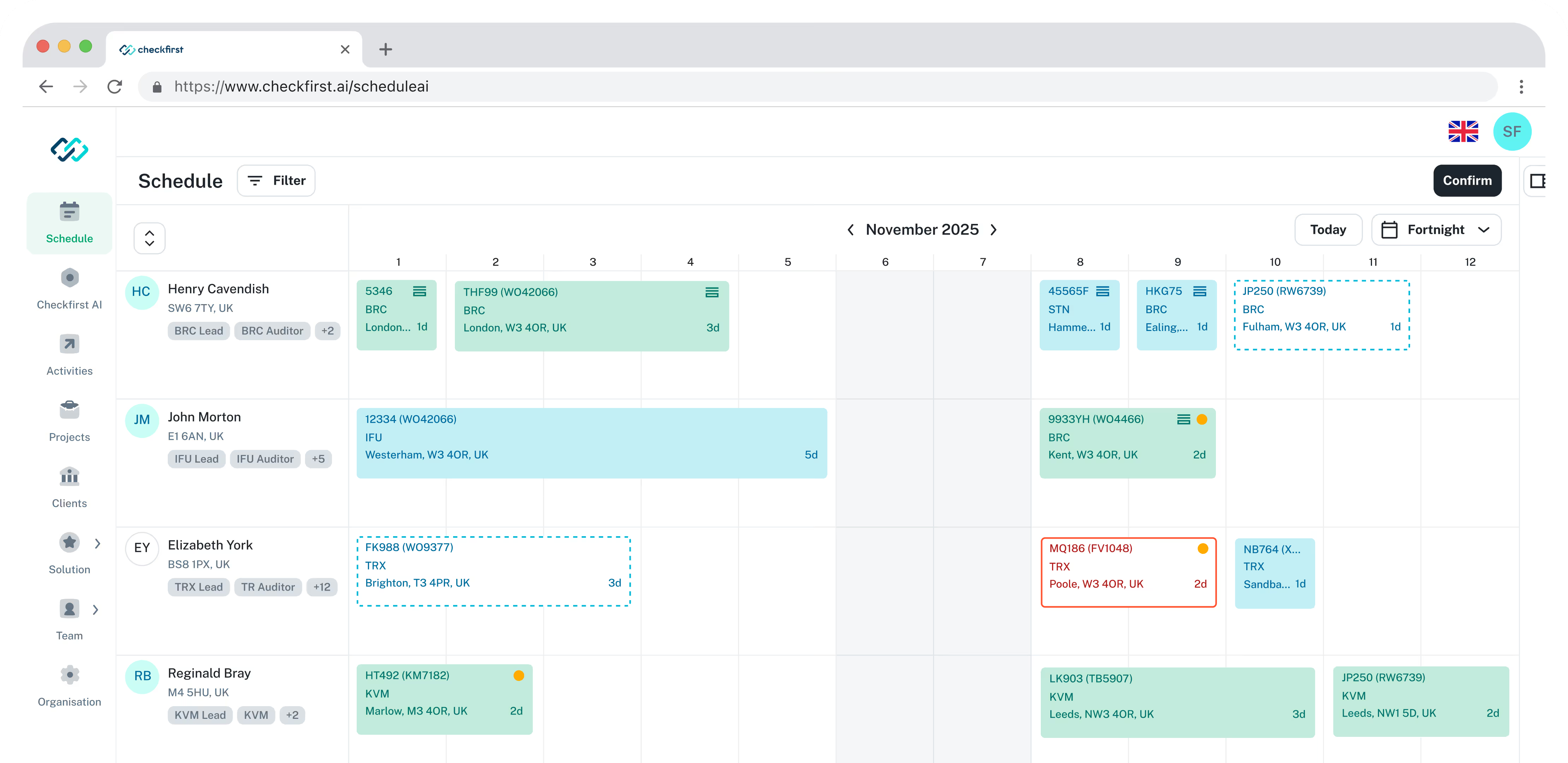
We designed our assessment lifecycle to address this exact pain. The workflow starts with adding a supplier profile and ends with a clear risk decision, with structured steps in between.
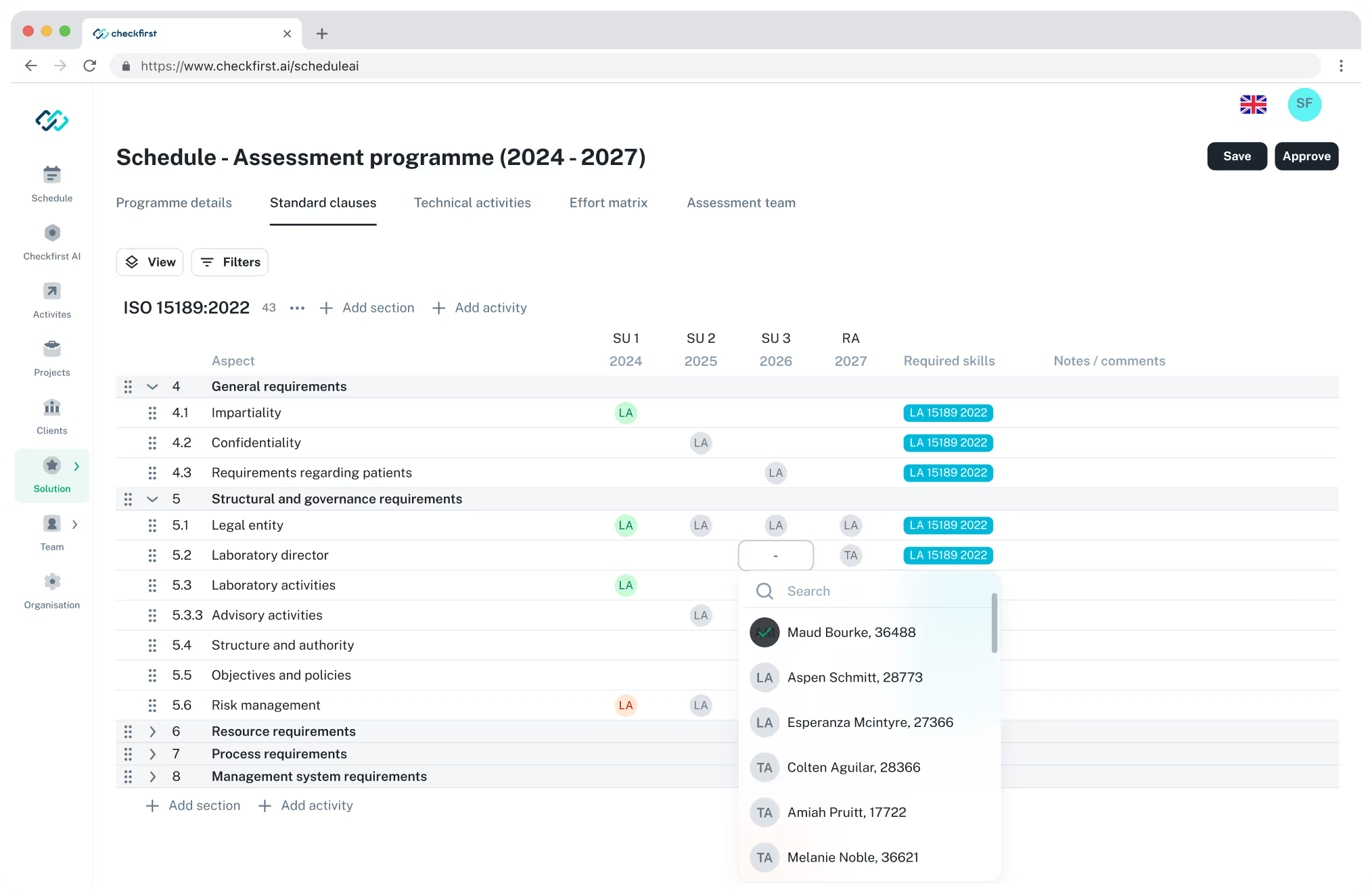
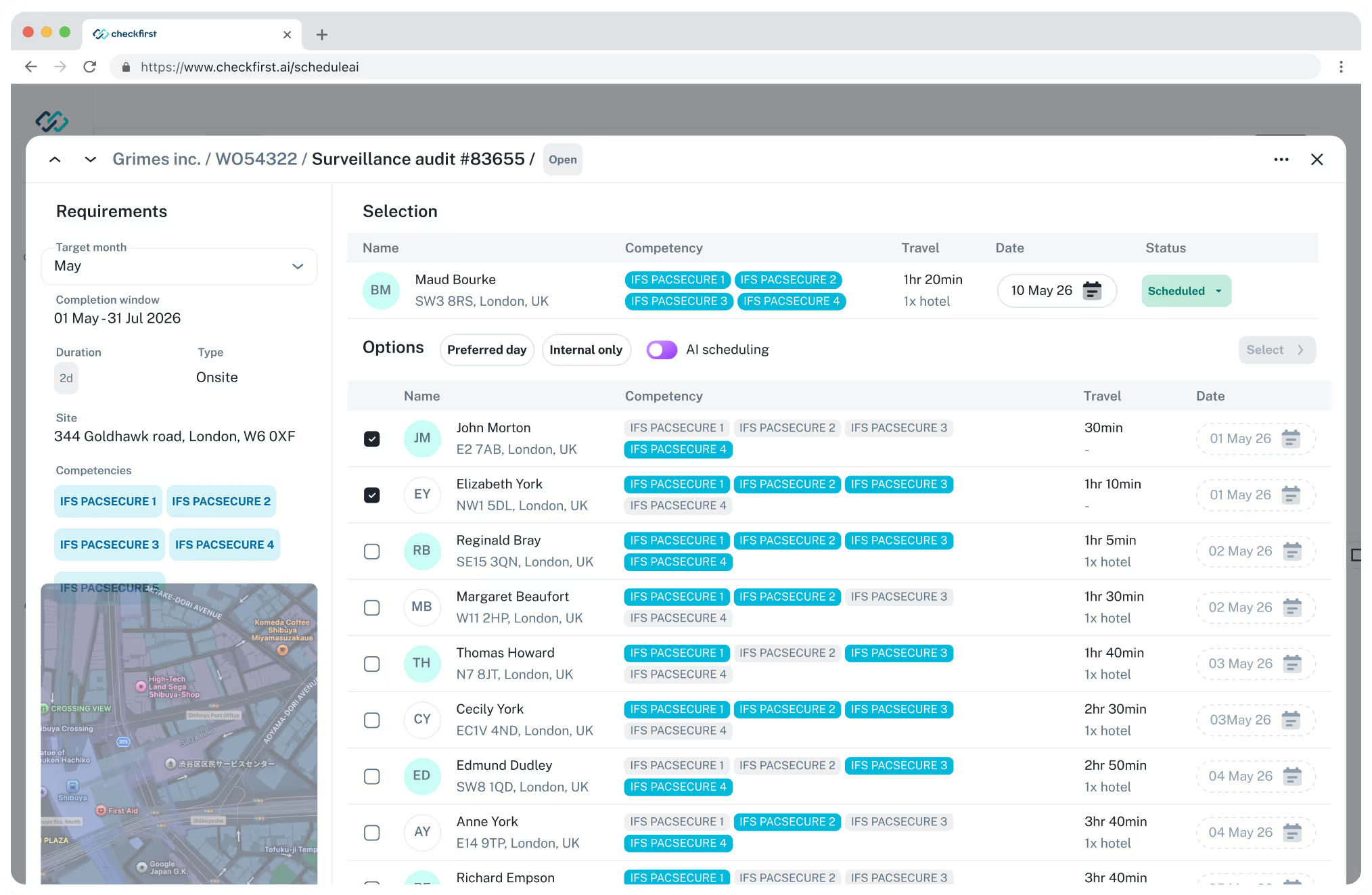
A typical mature assessment workflow includes:
- Supplier inventory and criticality tiering.
- External scanning of the supplier domain and infrastructure.
- Framework based control assessment.
- Adaptive questionnaires tied to actual risk gaps.
- Automated document review and evidence capture.
- Scoring, reporting, and risk decision tracking.
This repeatable structure is what moves teams from Managed to Defined. Instead of reinventing the process for every new supplier, we reuse a tested risk management pattern and adjust only what is necessary.
For TPRM leads, this clarity also makes it easier to delegate tasks to junior analysts without losing control of quality.
In the TIC world, where inspectors and auditors already juggle multiple standards, this kind of standardization is a relief. It reduces the cognitive load and the constant context switching between tools and templates.
It also makes audit trails cleaner when regulators or customers ask how we assessed a specific supplier risk.
6. How AI Changes TPRM Maturity In Practice
AI in TPRM is not about replacing human judgment. It is about removing the manual work that keeps specialists stuck in email threads and spreadsheet gymnastics.
In 2026, 50 to 58% of TPRM programs already use AI, yet only 22% rate it as very effective, mostly because the tools are generic and lack real framework alignment.

AI Engines Built For Framework Based Risk Management
Our AI Engine is structured around four specialized engines that mirror the way risk teams actually work. The flagship engine maps vendor data to all 243 controls in the CSA Cloud Controls Matrix across 18 domains, with evidence based ratings.
Other engines focus on vendor research, questionnaire analysis, and an AI assistant that answers specific risk questions using real citations. Every output is designed for review, not blind trust.
- JinoXtreme CSA assessments connect supplier answers to formal control ratings.
- Vendor Research pulls data from supplier websites, news, certifications, and filings.
- Questionnaire Analysis reads supplier responses and surfaces gaps.
- AI Assistant helps analysts query the entire assessment history using natural language.
At higher maturity levels, these engines handle most of the data collection and first pass analysis. Human experts then focus on exceptions, interpretation, and final risk decisions.
This split matches what advanced TPRM programs need in 2026, especially where staffing is limited but supplier risk is growing.
7. External Scanning And Web Research As Maturity Accelerators
One of the fastest ways to improve TPRM risk management maturity is to introduce independent external scanning. It gives us an objective view of supplier infrastructure risk without waiting for questionnaires.
Our ProvEye scanning engine, described on the assessments page, covers DNS health, SSL and TLS status, open ports, security headers, and known vulnerabilities in 30 to 60 seconds.
Why External Evidence Matters For Supplier Assessments
Relying only on self reported questionnaires keeps teams at a Managed or Defined maturity level. We have policies, but limited assurance on real world behavior.
External scanning and web research, such as Jino 360, add a third party view that is hard to achieve manually. They scan public sources for security incidents, certification status, and other risk indicators across the open web.
- We can catch suppliers with misconfigured email security before a phishing incident occurs.
- We can see when a supplier loses a certification that was key to our approval decision.
- We can correlate public breach reports with our own supplier list.
This kind of evidence feeds directly into TPRM risk scoring. It helps justify decisions to block or conditionally approve a supplier based on observable risk, not just policy wording.
For TIC teams, it also reduces the need for repeated manual checks across multiple external sources for every new engagement.
8. Using Frameworks Like CSA CCM To Structure TPRM Maturity
Mature TPRM programs do not start from a blank page when defining supplier controls. They lean on widely accepted frameworks and map supplier evidence directly to those control sets.
Our JinoXtreme CSA engine is built on the CSA Cloud Controls Matrix, covering all 243 controls across 18 security domains. This gives supplier assessments a consistent structure that auditors and security teams recognise immediately.
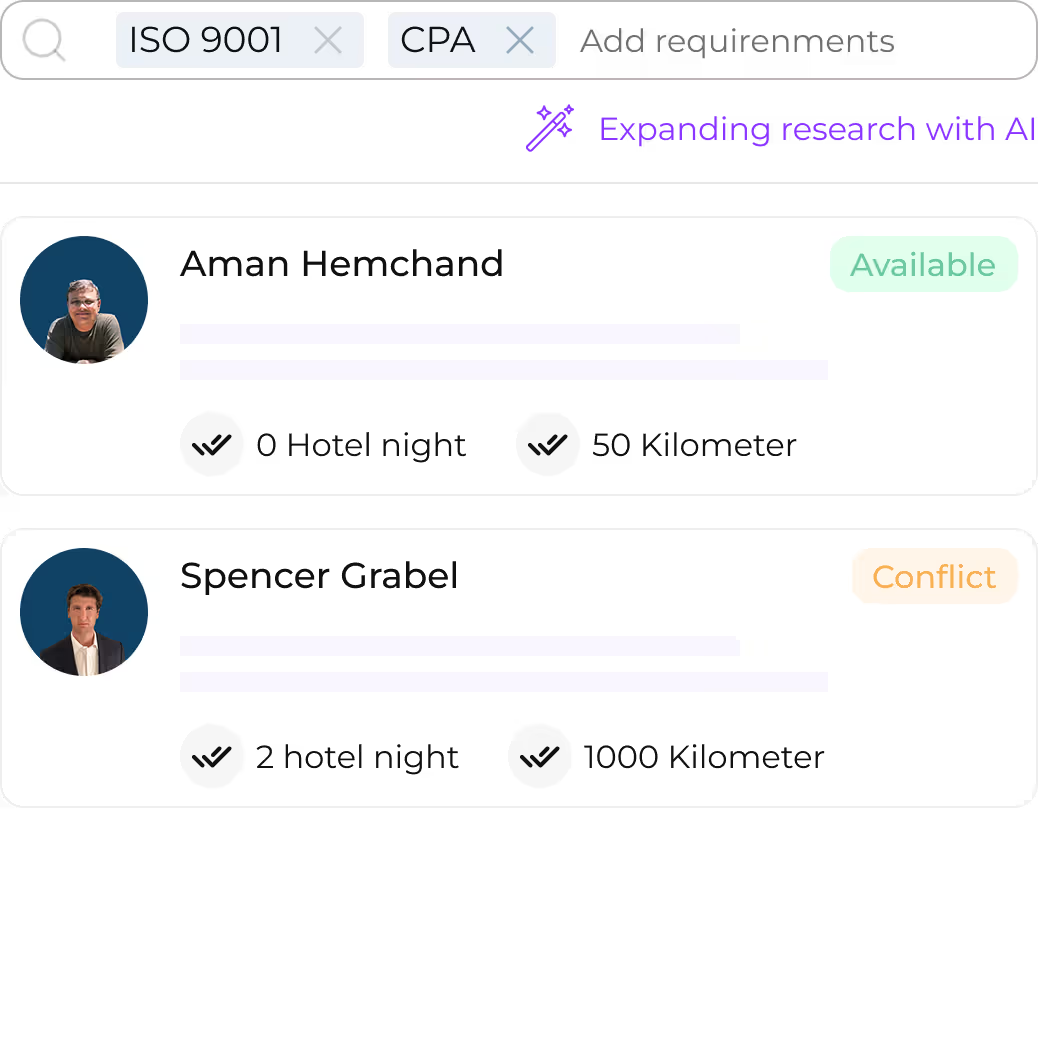
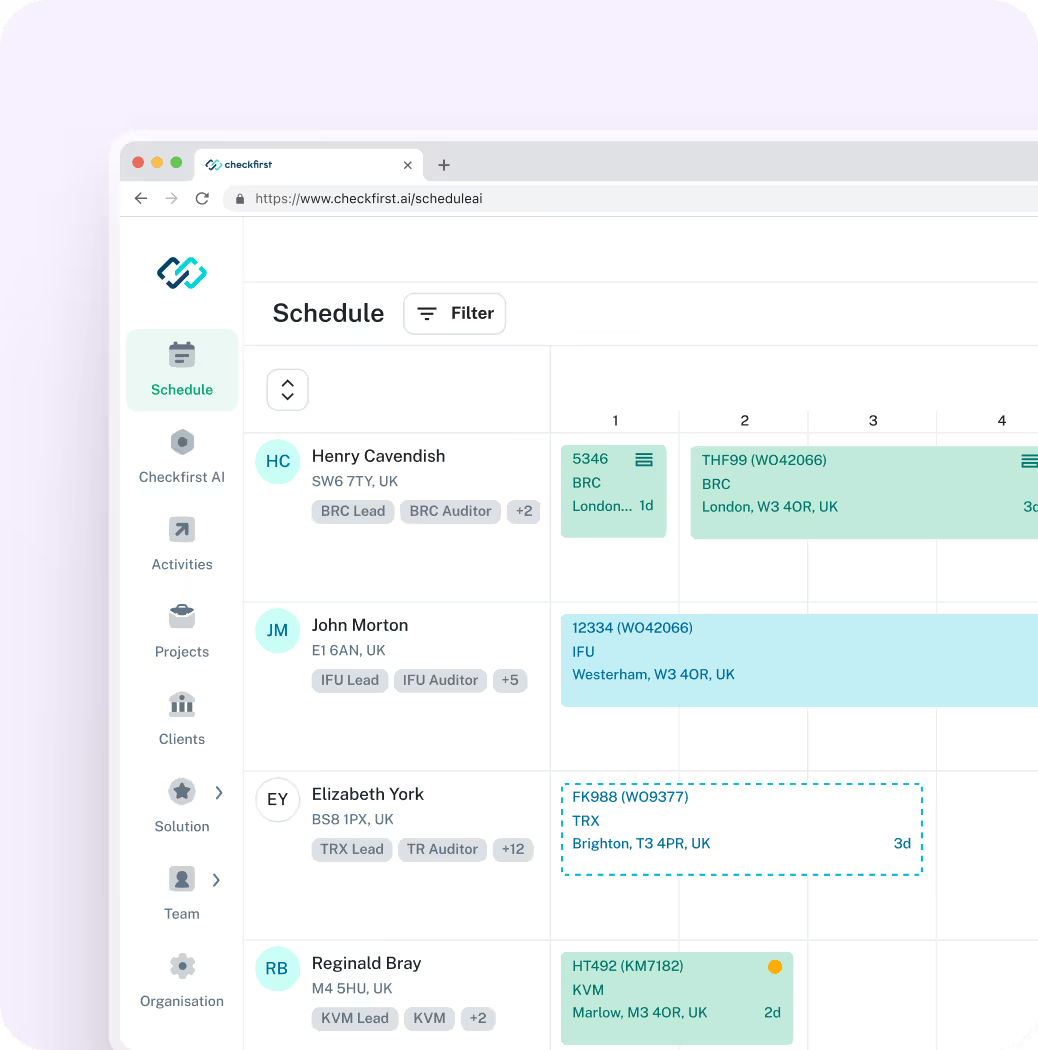
This approach gives us a common language for supplier controls, risk, and remediation. Instead of debating custom checklists, we align on recognized control objectives and focus on whether the supplier meets them.
From a maturity point of view, frameworks help in three concrete ways:
- Consistency across all suppliers, even when different analysts handle assessments.
- Comparability between suppliers in the same category or risk tier.
- Auditability when internal or external auditors review TPRM decisions.
We see this especially in highly regulated sectors, where auditors expect clear mapping to known frameworks. Trying to maintain bespoke control sets at scale usually stalls maturity progress.
Framework alignment is one of the most reliable shortcuts from stage 2 or 3 into stage 4 maturity, because it standardizes both language and expectations.
For TIC organizations, this also allows inspection and certification teams to reuse existing domain expertise. They already work with standards and frameworks every day, and TPRM becomes another structured domain rather than an isolated process.
That familiarity reduces change resistance when we introduce new TPRM tooling or workflows.
9. Building A Roadmap: From Manual Spreadsheets To AI-Native TPRM
Most risk leaders know that running supplier assessments in Excel and Outlook is not sustainable. The challenge is to move incrementally without losing sight of day to day obligations.
We usually recommend a three horizon roadmap that maps directly to maturity stages and available capacity.
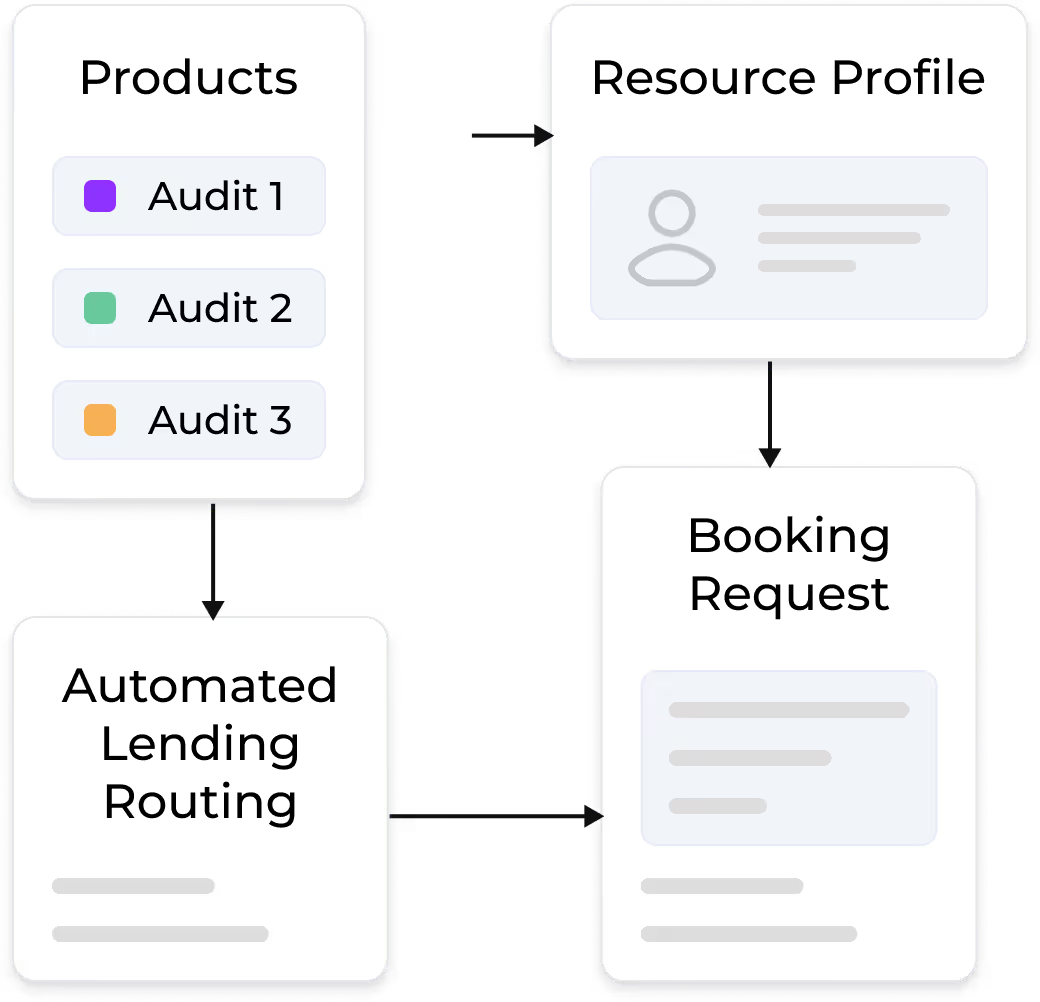
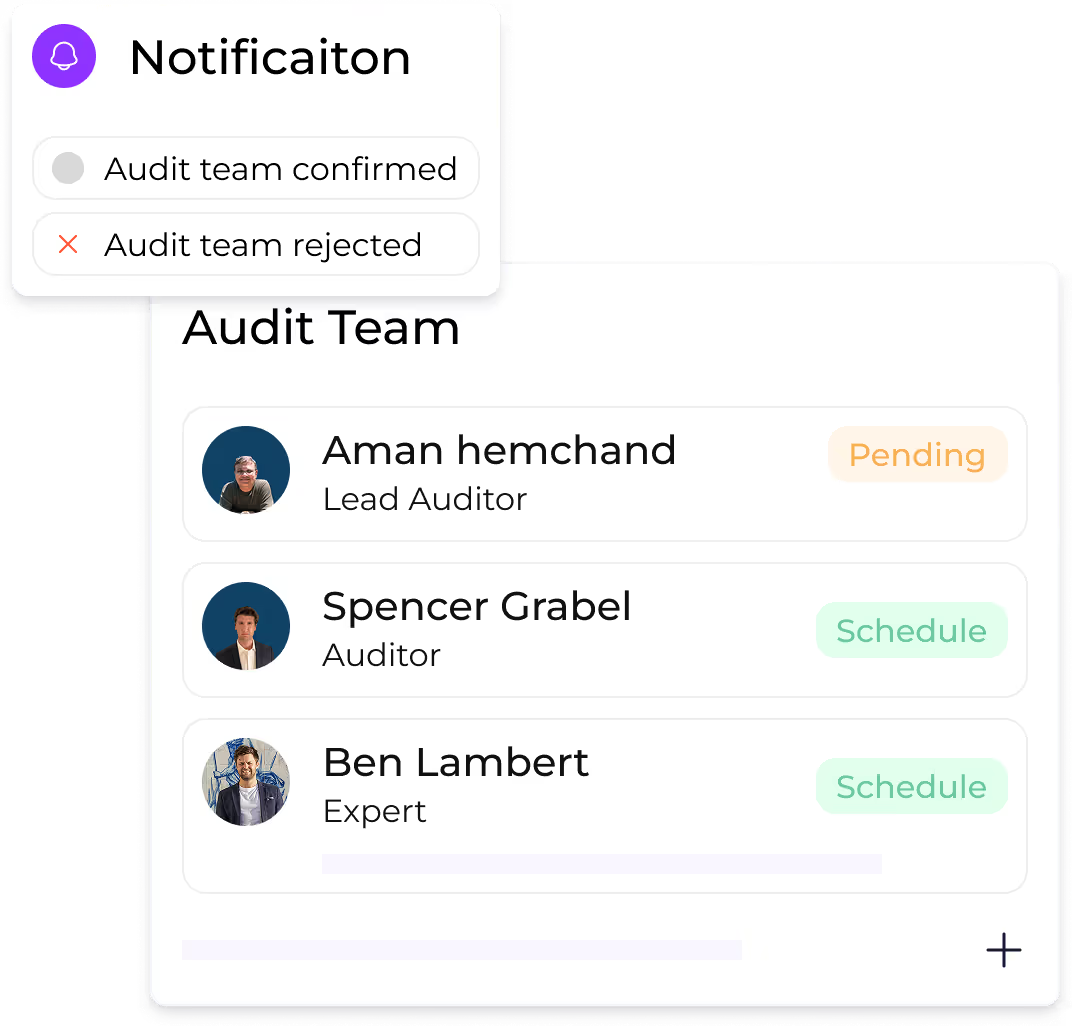
| Horizon | Maturity Impact | Typical Actions |
|---|---|---|
| 0–6 months | Initial to Managed | Create centralized supplier inventory, define basic risk tiers, standardize questionnaires for critical suppliers. |
| 6–18 months | Managed to Defined | Introduce framework based controls, automate external scanning, adopt AI driven document and questionnaire analysis. |
| 18–36 months | Defined to Quantified and Optimized | Measure control pass rates, integrate TPRM with enterprise risk, expand continuous monitoring and alerting. |
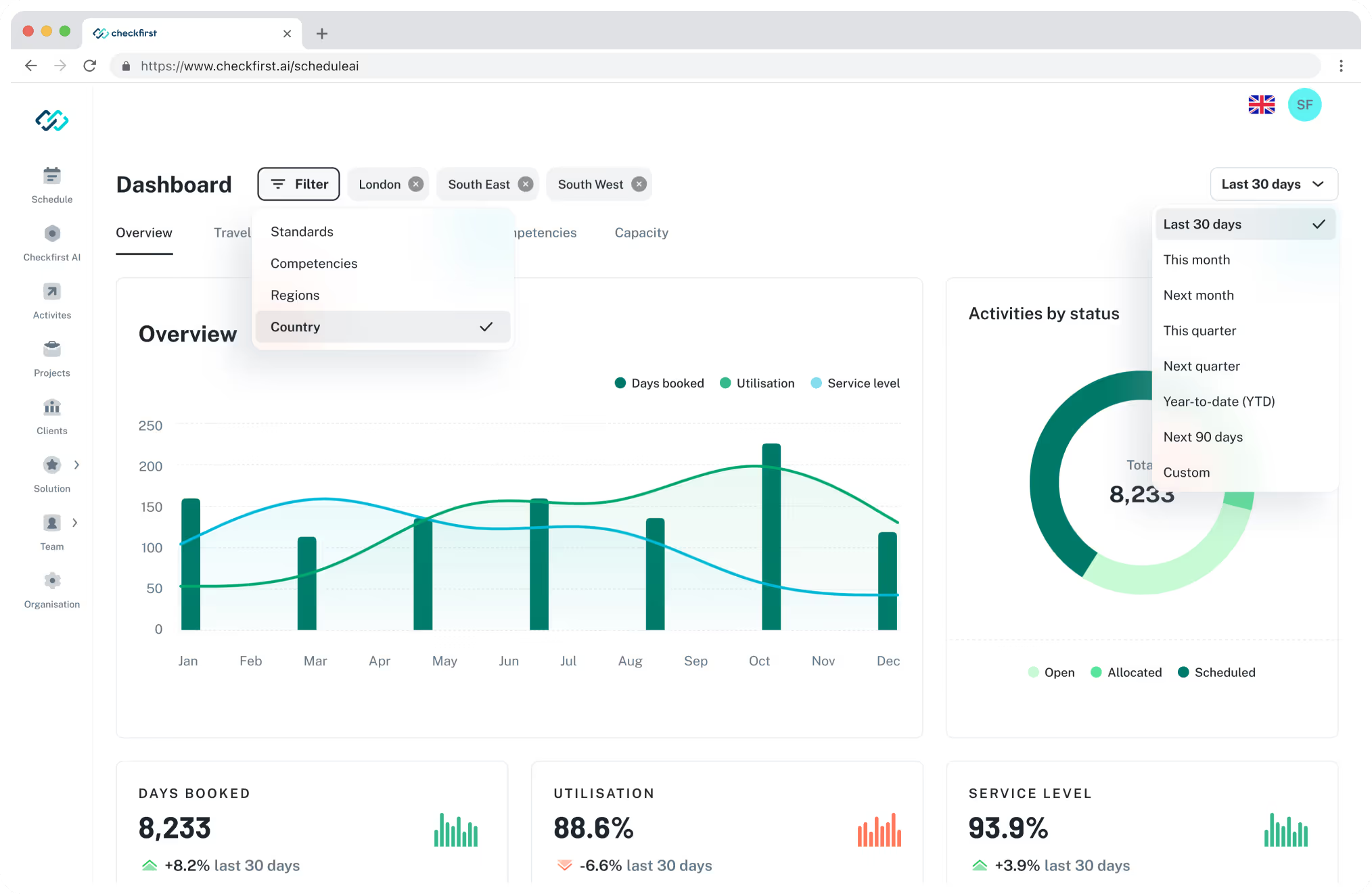
Platform choice should match the current horizon and budget. Our Starter, Professional, and Enterprise tiers are designed so teams can begin with structured assessments and scale into advanced AI features without replatforming.
The key is to tie each maturity step to a concrete outcome. For example, “reduce time to complete a critical supplier assessment from four weeks to five days” or “achieve 90% control test pass rate on critical suppliers”.

With realistic targets, even small TPRM teams can show measurable progress to stakeholders. That is often what unlocks further investment in better tools and additional staff.
For inspection and certification organizations in particular, these improvements also translate directly into faster, more consistent client engagements.
10. Governance, Collaboration, And Centralized Risk Management
Technology alone does not move an organization up the TPRM maturity curve. Governance, roles, and cross functional collaboration have to evolve in parallel.
About 90% of organizations are moving toward centralized risk management, bringing TPRM closer to enterprise risk and compliance functions. Learn more about our mission to eliminate inefficiencies from critical quality processes instead of leaving it isolated in procurement.


In practical terms, this means:
- Defining clear ownership for supplier risk across security, compliance, and procurement.
- Agreeing on a single source of truth for supplier data and assessment outcomes.
- Aligning TPRM policies with wider enterprise risk appetite and regulatory expectations.
Inspection and certification teams are often central in this shift because they already hold trusted relationships with suppliers and regulators. Their expertise in objective assessment is exactly what centralized TPRM needs.
Our role is to provide tools that respect that expertise while removing the repetitive, low value workload that holds them back.


Centralized governance also simplifies communication with boards and executive teams. Instead of scattered updates from different departments, they receive a unified view of supplier risk, trends, and planned improvements.
In 2026, that unified view is quickly becoming an expectation from regulators, not just an internal convenience.
Conclusion
TPRM risk management maturity is not a theoretical model. It is a practical way to relieve the pressure on small teams who carry the responsibility for supplier related risk in complex ecosystems.
In 2026, the path forward is clear. Standardize supplier assessments, improve data quality, introduce independent scanning and AI supported analysis, and connect TPRM governance to enterprise risk.
We built CheckFirst around these exact needs so that security, compliance, and TIC professionals can spend less time chasing spreadsheets and more time making informed, defensible decisions about supplier risk.
If you are ready to benchmark your current TPRM maturity and see how structured, AI native workflows can help, our team is available to walk you through a live assessment and discuss your roadmap. For teams that need hands-on support, our managed TPRM service provides expert-led vendor risk management alongside the platform.